It is one of the most common questions we hear from Utah homeowners: do solar panels still work when it is cold, cloudy, or snowing? The short answer is yes. Solar panels keep producing electricity all winter, though output is lower than in summer because the days are shorter and the sun sits lower in the sky. Here is what really happens to solar panels during a Wasatch Front winter.
Cold Weather Is Not the Problem
Solar panels run on light, not heat. In fact, PV panels generally operate more efficiently at cooler temperatures, since heat slightly reduces a panel’s voltage. A crisp, clear January day in Utah can be a very productive day for each hour the sun is up. The U.S. Department of Energy’s consumer guide notes that PV systems can harness energy in both hot and cold climates.
Why Winter Production Is Lower
Winter output drops for three main reasons:
- Shorter days. There are fewer daylight hours in December than in June.
- Lower sun angle. Sunlight comes in at a lower angle, and shadows from trees and buildings get longer.
- Snow cover and storms. Panels covered in snow produce little until the snow slides off.
That is why solar systems are designed around annual production. Strong spring and summer months balance out the shorter winter days.
What About Snow?
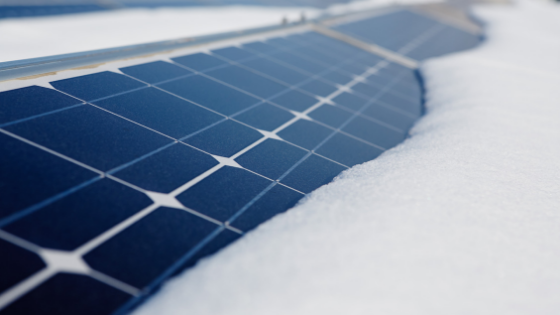
Snow is usually a short-term issue. Panels are dark, smooth, and tilted, so once the sun hits them, snow tends to warm and slide off, often within a day or two after a storm. Fresh snow on the ground can also reflect some extra light toward the panels.
Panels are built and tested to handle snow and wind loads, and a professional installer will design the racking and attachments for local snow loads. In Utah, that can vary quite a bit between a home in Salt Lake City and one at higher elevation in Park City.
Should you clear snow off your panels?
Usually, no. Climbing on an icy roof is dangerous, and metal shovels or hard tools can scratch the glass or damage the panels. If you want to clear panels you can reach safely from the ground, use only a soft, solar-specific snow rake. In most cases, the best approach is to let the sun do the work.
Winter Inversions and Cloudy Days
Along the Wasatch Front, winter inversions can trap haze in the valleys for days at a time. Panels still produce on hazy and overcast days, though less than in full sun. Utah gets plenty of clear, sunny days overall, which is why solar remains a strong option here.
How Winter Affects Your Bill in Utah
Most Rocky Mountain Power solar customers stay connected to the grid, so you will still get power on short winter days. Under Utah’s net billing program, any energy you export earns a bill credit at rates listed in Rocky Mountain Power Schedule 137. Those rates are updated each year and differ between summer and winter months. Learn more in our guide to on-grid and off-grid systems.
Tips for Better Winter Performance
- Design matters most. Good placement, the right tilt, and planning for winter shade make the biggest difference.
- Monitor your system. Most systems include an app that shows daily production, so you can spot problems early.
- Consider a battery. Winter storms can cause outages. A battery can keep essential circuits running. See how solar helps you prepare for emergencies.
- Do not wait for summer. Winter is a good time to plan, get a site assessment, and handle permitting so your system is ready for the long, sunny days of spring.
The Bottom Line
Solar panels work in Utah winters. Production dips during the shortest days and right after storms, but it rebounds quickly. Over a full year, Utah’s sunny climate makes solar a practical choice. Explore our solar services or read our FAQ.
Talk to a Local Utah Solar Team
Rocky Mountain Renewable Energy has been designing and installing solar systems for Utah homes and businesses since 2010, from our office at 778 Parkway Dr in North Salt Lake. If you would like straight answers for your own property, request a free quote or call us at 801-980-0700.